
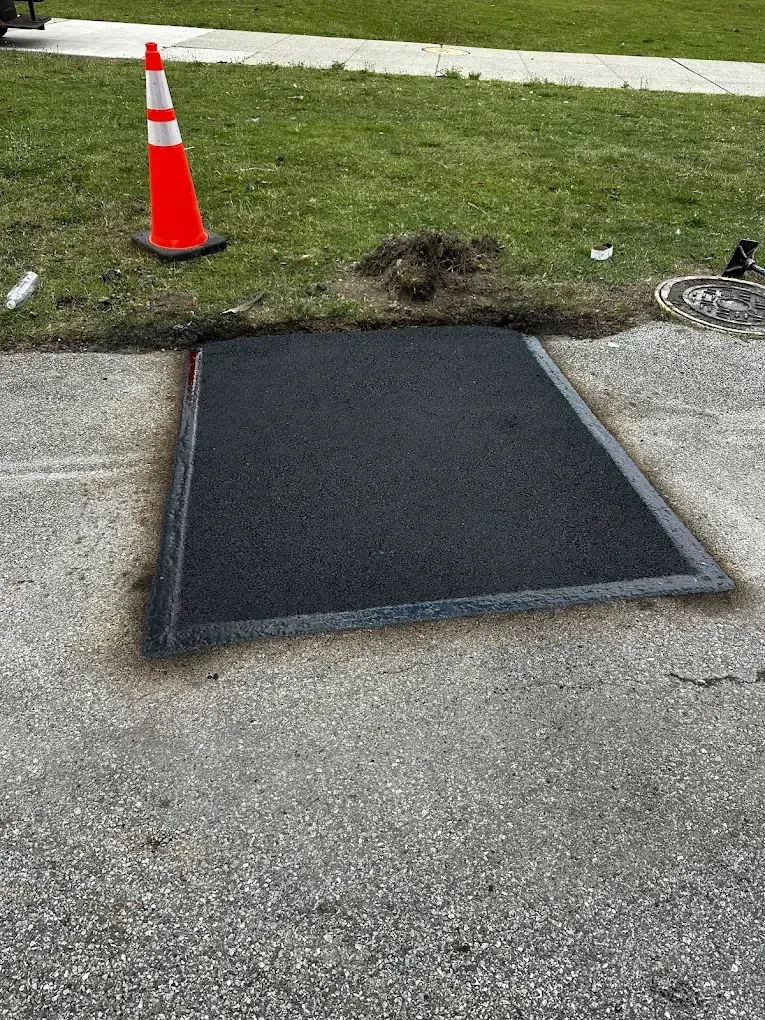

Fixes That Restore Pavement Function
Asphalt Patch and Repair in Frederick for surface failures, potholes, and deteriorated pavement before damage spreads
Potholes and broken asphalt create trip hazards, vehicle damage risks, and accelerated pavement deterioration as water infiltrates damaged areas and erodes the base layer beneath the surface. Asphalt Medic LLC repairs pavement failures across Frederick, addressing localized damage on driveways, parking lots, and high-traffic surfaces before small problems expand into conditions requiring full replacement. When base integrity remains sound beneath damaged asphalt, targeted patching restores surface function and appearance at a fraction of the cost of complete pavement reconstruction.
Repair work removes failed asphalt to expose the base layer, which is then re-compacted or supplemented if voids have developed, followed by new asphalt placement that bonds to surrounding pavement and matches existing grade. The approach differs from crack filling, which seals surface-level damage, because patching addresses areas where asphalt has broken apart or the foundation has settled and requires rebuilding before a new surface layer can perform properly.
Request a repair evaluation to determine whether damaged areas need patching or indicate broader pavement issues requiring more extensive work.
What Changes After Pavement Repairs Finish
Patching involves cutting out deteriorated asphalt in a defined shape rather than feathering edges, which creates clean boundaries where new material compacts tightly against existing pavement and prevents the edge crumbling that occurs with poorly defined repairs. Base preparation within the patch area determines longevity because asphalt placed over unstable or saturated base material will settle and fail again within months.
After repairs, the patched area sits flush with surrounding pavement and supports vehicle weight without deflection, and water no longer pools in depressions where asphalt had broken away. The new surface eliminates the jarring impact and potential tire damage caused by potholes, and adjacent pavement stops experiencing the stress concentration that develops around damaged areas and accelerates crack formation at patch boundaries.
Patching is cost-effective when damage remains localized and the surrounding pavement remains structurally sound, but properties with widespread cracking or multiple patches across the same area typically need overlay or full replacement to address underlying pavement failure. Repair decisions depend on the extent of damage, base condition, and remaining pavement lifespan.
What Property Owners Usually Ask
Repair decisions involve assessing damage severity and determining whether patching provides a lasting fix or temporary measure before broader pavement work becomes necessary.
What causes potholes to form in asphalt pavement?
Potholes develop when water enters through cracks, saturates the base layer, and creates voids where material erodes away, leaving unsupported asphalt that breaks apart under vehicle weight and repeated traffic loading.
How do you determine if pavement needs patching or replacement?
Isolated failures with sound surrounding pavement respond well to patching, while widespread damage, extensive cracking, or base failure across large areas indicates that overlay or reconstruction will provide better long-term results.
When should asphalt repairs be completed?
Addressing pavement failures promptly prevents further deterioration and protects adjacent asphalt from the accelerated stress and water intrusion that occur around damaged areas, particularly before winter freeze-thaw cycles worsen existing damage.
Why do some patches fail quickly after installation?
Patches fail when base voids are not corrected before new asphalt is placed, when edges are not cut cleanly to create proper bonding surfaces, or when repairs are attempted during cold or wet conditions that prevent proper compaction.
What should repaired pavement look like after work is complete?
Patches should sit flush with surrounding asphalt without lips or depressions, show tight seams where new material meets existing pavement, and support traffic without visible deflection or soft spots that indicate base problems.
Asphalt Medic LLC inspects damaged pavement to identify the extent of repair needed and whether underlying base issues require correction before surface work begins. Schedule an assessment to determine the most effective and economical solution for your pavement condition.