
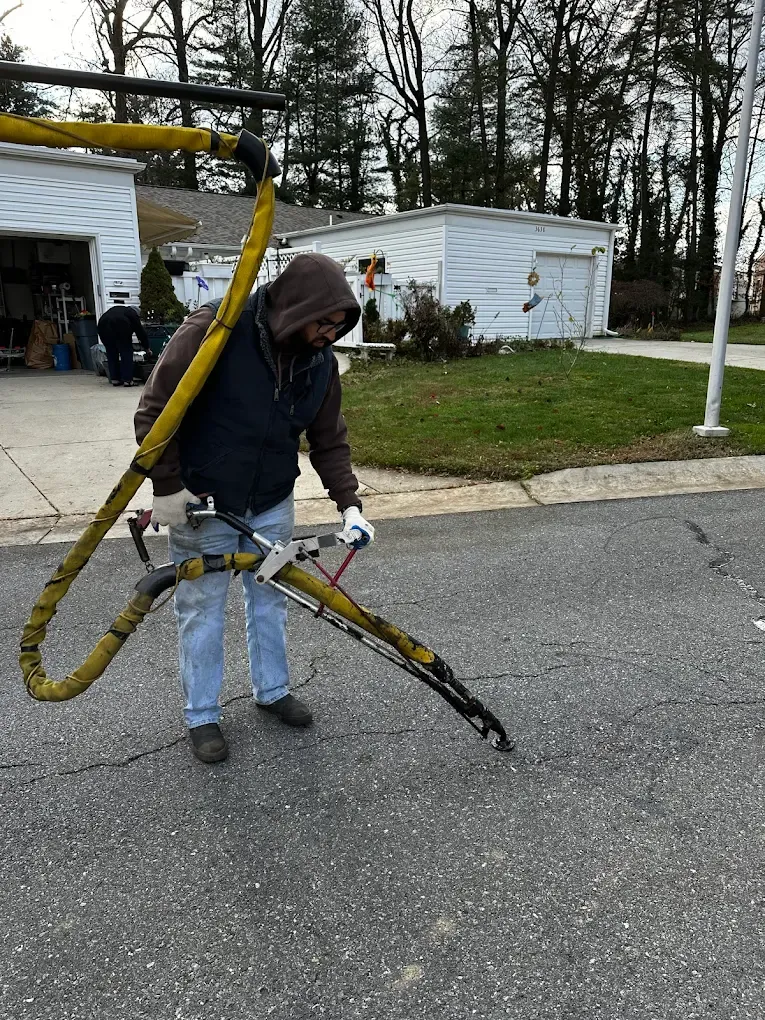

Repairs That Stop Further Pavement Damage
Crack Filling in Frederick for asphalt surfaces showing minor to moderate cracking before foundation damage occurs
Cracks wider than a quarter inch allow rainwater to reach the base layer beneath asphalt, where it softens the foundation and creates the depressions and potholes that require expensive reconstruction to fix. Asphalt Medic LLC seals cracks across Frederick to block moisture penetration before freeze-thaw cycles expand the damage, preserving the pavement foundation and preventing the accelerated deterioration that turns small cracks into large structural failures. Driveways and parking lots exposed to seasonal temperature swings and precipitation need crack treatment before winter weather magnifies existing damage.
The crack filling process uses hot rubberized material that remains flexible as pavement expands and contracts with temperature changes, unlike rigid fillers that separate from crack edges and reopen during cold weather. Proper crack sealing requires cleaning debris from the crack channel so filler bonds directly to asphalt edges, creating a watertight seal that prevents the moisture intrusion responsible for base erosion.
Schedule a pavement inspection to identify cracks that need immediate treatment and assess overall surface condition.
Why Crack Filling Prevents Foundation Failure
Water entering through pavement cracks reaches the granular base layer and creates voids where material washes away, leaving unsupported asphalt that collapses under vehicle weight. Filling cracks stops this infiltration at the surface, protecting the base from saturation and preventing the progressive widening that occurs when water freezes inside cracks and forces edges apart during Maryland's winter freeze-thaw cycles.
Once cracks are filled, you no longer see water pooling in crack channels after rain, and the pavement stops developing the spiderweb patterns that indicate spreading damage. The flexible filler moves with the asphalt as temperatures change, maintaining the seal instead of cracking out and reopening like rigid patches, which keeps the foundation dry and stable beneath the surface.
Crack filling addresses surface-level damage and prevents progression to base failure, but it does not repair pavement where the foundation has already deteriorated—those areas require removal and reconstruction. Timing matters because cracks filled early cost far less than the patching or replacement needed once foundation damage develops.
Common Questions About This Service
Crack filling involves material selection and timing decisions that determine how well repairs hold up under traffic and weather exposure in Frederick.
What size cracks require professional filling?
Cracks wider than a quarter inch need sealing to prevent water infiltration, while hairline cracks can often wait unless they show signs of widening or appear in high-traffic areas where they will expand quickly.
How does hot-pour crack filler differ from cold patch material?
Hot rubberized filler remains flexible through temperature changes and bonds tightly to crack edges, while cold-applied products tend to harden and separate from asphalt as the pavement contracts during winter.
When should cracks be filled to prepare for winter?
Treating cracks in late summer or early fall prevents freeze-thaw damage during winter months, when trapped moisture expands and forces cracks wider with each temperature cycle.
Why do some filled cracks reopen over time?
Cracks reopen when underlying base movement continues or when filler loses flexibility and separates from pavement edges, which happens faster with lower-quality materials or improper surface preparation before filling.
What preparation does asphalt need before crack filling?
Cracks must be cleaned of dirt, vegetation, and loose debris so filler adheres directly to sound asphalt rather than sitting on top of contamination that prevents bonding.
Asphalt Medic LLC examines pavement to distinguish cracks that need immediate sealing from damage indicating deeper structural issues. Contact us to evaluate your asphalt and determine the most effective repair approach before minor cracking becomes major failure.